





New clue to what energises auroral light shows
Auroras, known for their shifting ribbons of green and other colours across polar skies, have long been linked to charged particles interacting with Earth’s upper atmosphere. A new international study now adds a clearer explanation for where part of that energy comes from.
The research was co led by the Department of Earth and Planetary Sciences at The University of Hong Kong (HKU) and the Department of Atmospheric and Oceanic Sciences at the University of California, Los Angeles (UCLA). The findings were reported by Universe Today.
Plasma waves along magnetic field lines
According to the study, plasma waves travelling along Earth’s magnetic field lines function like an invisible power source. These waves move through space along the pathways formed by the planet’s magnetic field, guiding energy in a way that is not visible from the ground.
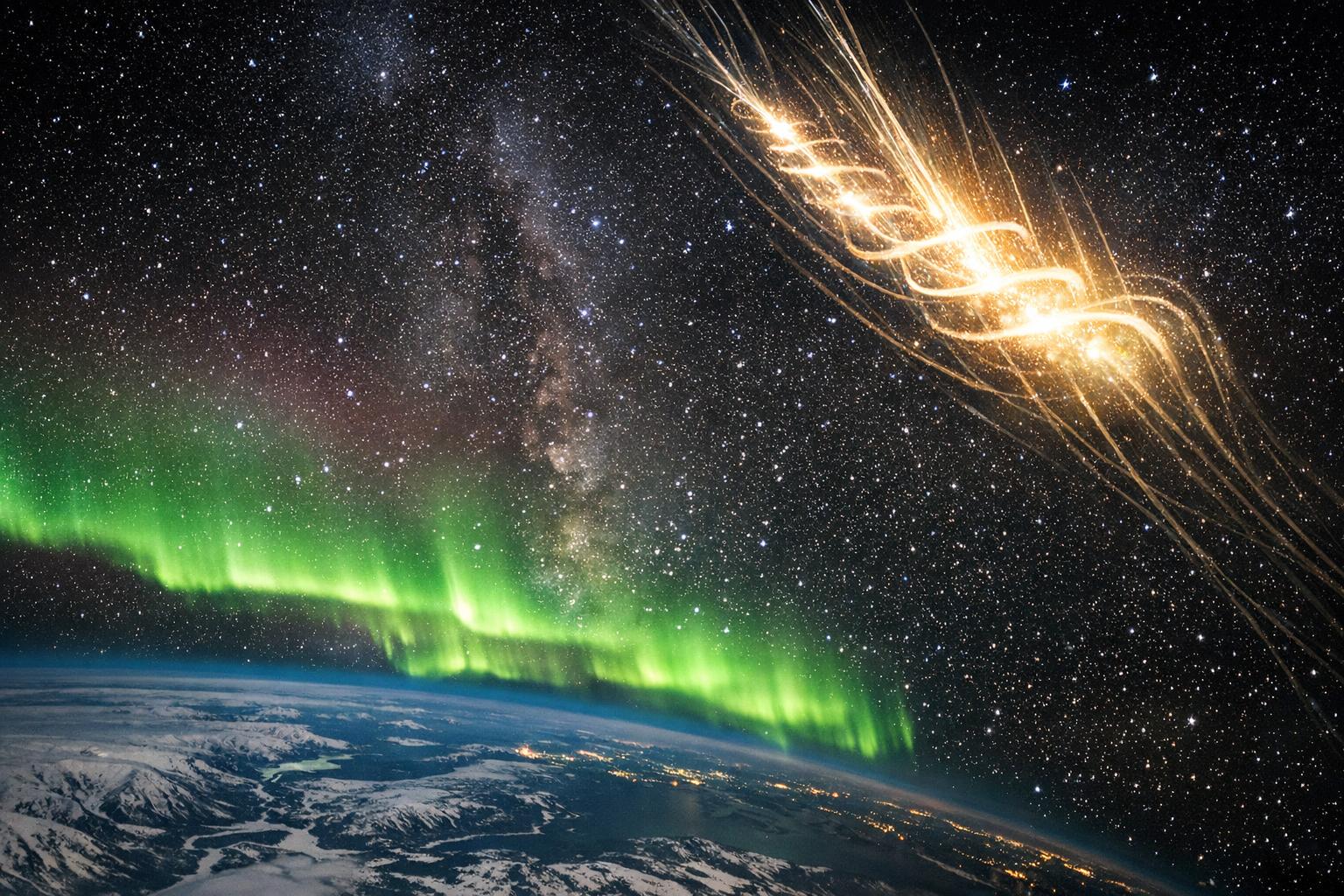
The team describes this process as fuelling the auroral displays seen in the sky. In other words, the colourful glow associated with auroras is supported not only by incoming charged particles, but also by the energy carried by these plasma waves as they travel along magnetic connections to the polar regions.
Why the finding matters
Auroras are more than a visual spectacle. They are a sign of active processes in near Earth space, where the magnetic field and charged particles interact. Identifying the role of plasma waves helps explain how energy is transferred within this system and how it ultimately contributes to the light emissions observed in the atmosphere.
The study points to plasma waves as a key piece in understanding the chain of events that powers auroral activity. By highlighting an energy source that operates along magnetic field lines, the research provides a more complete picture of how auroras are sustained.
Who led the research
The work brought together an international team, with leadership from HKU and UCLA. The researchers focused on how plasma waves move through Earth’s magnetic environment and how that movement can act as a driver for auroral phenomena.
The study adds to ongoing efforts in space and atmospheric science to map the mechanisms behind auroras, which remain one of the most recognisable effects of space weather on Earth.