





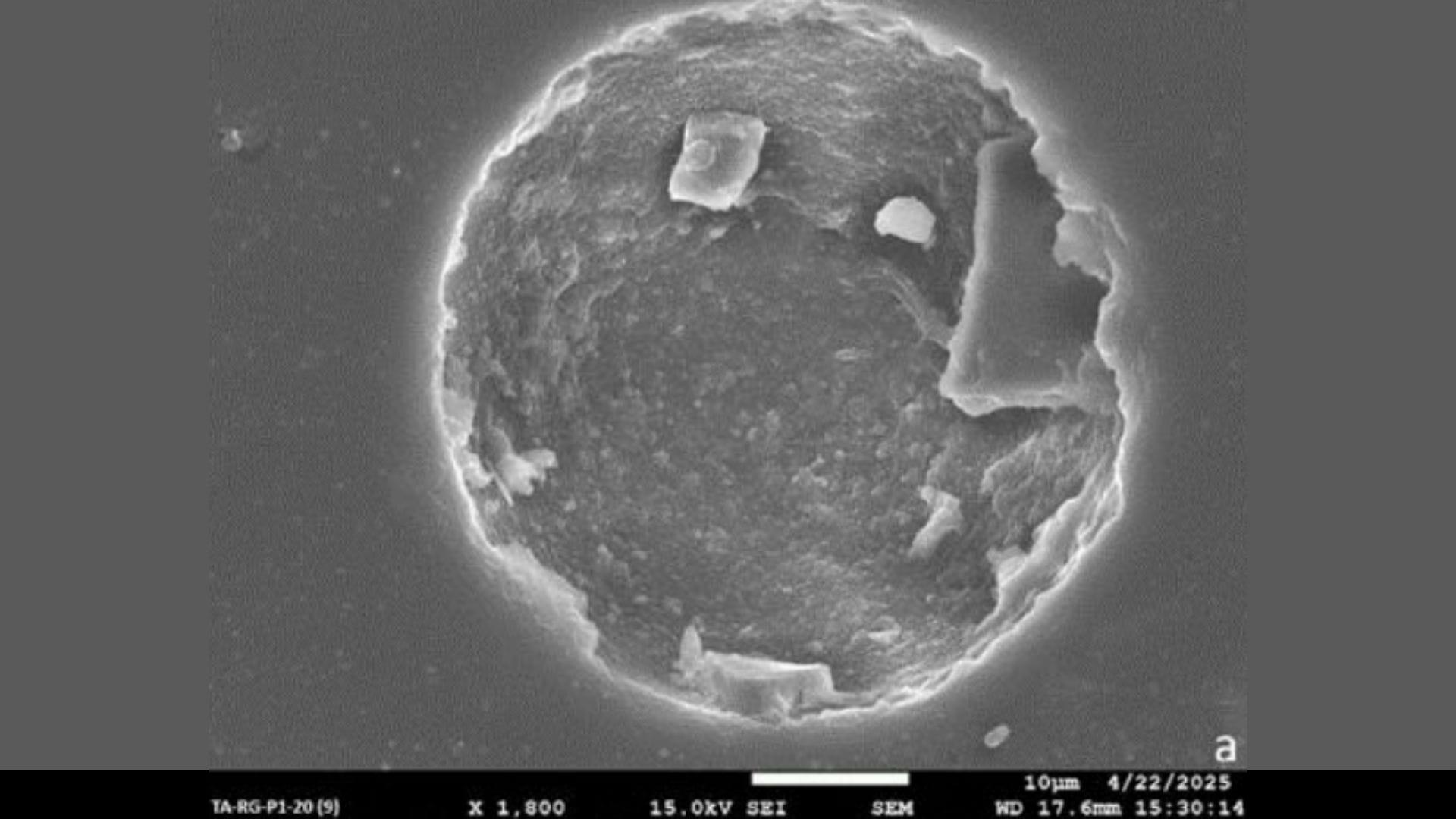
Scientists investigating the Ramgarh crater in Rajasthan have reported evidence that the feature was likely formed by the impact of an iron meteorite about 165 million years ago.
The key clue comes from the discovery of small particles described as impact spherules that show signs of being shaped by movement through the atmosphere. Researchers say these aerodynamically formed spherules are consistent with material produced during a high-energy impact event.
What was found at the site
According to the study, the team identified spherules that appear to have been formed and altered by intense heat and rapid cooling associated with an impact. Their aerodynamic shaping suggests they travelled through air while molten or semi-molten before solidifying.
Such spherules are widely studied in impact research because they can preserve information about the conditions at the time of collision, including temperature, pressure and the nature of the impacting body.
Why an iron meteorite is being considered
The researchers say the characteristics of the recovered spherules strongly point to an iron meteorite as the object that struck the region. Iron-rich impactors can create distinctive signatures in the debris produced during an impact, and the reported spherules are being cited as supportive evidence for this scenario.
The findings add to ongoing scientific efforts to determine how the Ramgarh structure formed and to distinguish between impact-related origins and other geological processes.
Estimated age of the impact
The study places the likely event at around 165 million years ago. Establishing the age of an impact structure is important for placing it within Earth’s geological timeline and for comparing it with other known craters.
The reported timeframe positions the Ramgarh impact in the mid-Mesozoic era, a period marked by significant changes in Earth’s surface environments and life.
What the finding means
Researchers say the identification of impact spherules provides additional physical evidence supporting an impact origin for the Ramgarh crater. The work also contributes to documentation of meteorite impacts in the Indian subcontinent by adding data that can be examined and compared with other sites.
Further scientific analysis of materials from the crater and surrounding area can help refine details about the impact, including the properties of the meteorite and the effects of the collision on local geology.