





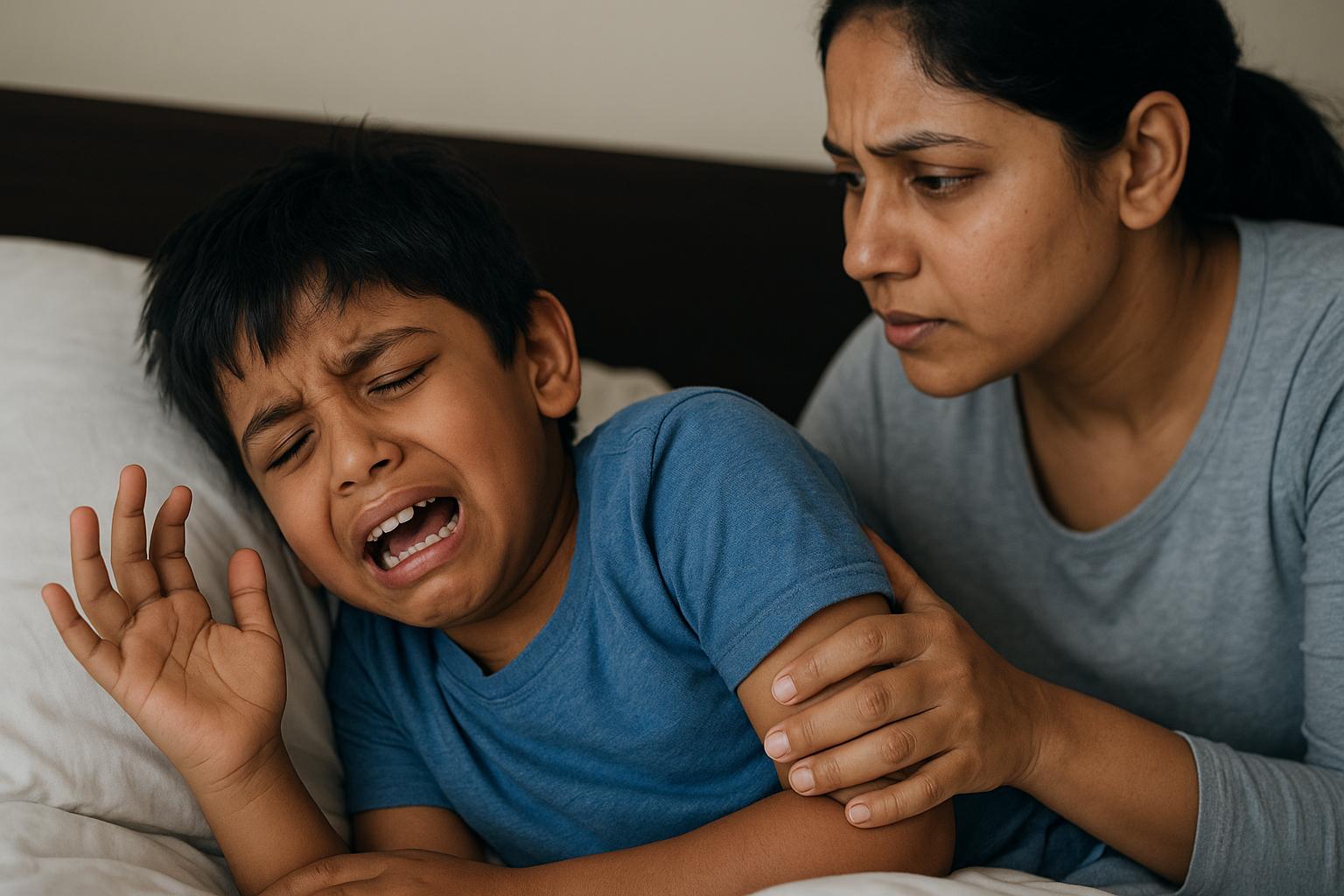
Waking up to a child screaming, sweating or appearing terrified can be deeply unsettling for parents. In many cases, these episodes are not nightmares but sleep terrors, a type of sleep disturbance that happens while a child is still asleep.
Sleep terrors usually occur in the first part of the night. A child may sit up abruptly, cry loudly, breathe fast or look confused and inconsolable. Their eyes might be open, yet they may not recognise a parent’s voice or touch. Unlike nightmares, which happen during dreaming sleep and are often remembered, sleep terrors typically leave no clear memory the next morning.
How sleep terrors are different from nightmares
Nightmares usually occur later in the night and children can often describe what scared them after they wake up. Sleep terrors tend to happen earlier and the child is difficult to fully awaken. Parents may notice that attempts to comfort or question the child do not seem to help, because the child is not fully conscious.
Why they can happen
Sleep terrors are linked to partial arousal from deep sleep. They are more common in children than adults. Episodes may be more likely when a child is overtired, stressed, unwell or has an irregular sleep schedule. They can also appear alongside other sleep-related issues such as sleepwalking.
What parents should do during an episode
The safest approach is to stay calm and focus on preventing injury. Parents should not try to shake the child awake. Instead, ensure the child cannot fall off the bed, bump into furniture or run into unsafe areas. Speak gently, keep lights low and wait for the episode to pass.
Once the child settles, guide them back to sleep if needed. The next morning, it is usually best not to press the child for details, since most children do not remember the episode and repeated questioning can increase anxiety.
Steps to make nights safer
Consistent bedtime routines and adequate sleep can reduce the likelihood of episodes. Parents can also make the sleep environment safer by clearing obstacles, securing windows and using safety gates if a child tends to wander during the night.
When to seek medical help
Parents should consider professional advice if episodes are frequent, lead to injury, disrupt the child’s daytime functioning, or if there are other concerning sleep symptoms. A clinician can help rule out other conditions and guide families on management.
Sleep terrors can look dramatic, but understanding them and responding safely can help families handle these episodes with greater confidence.