





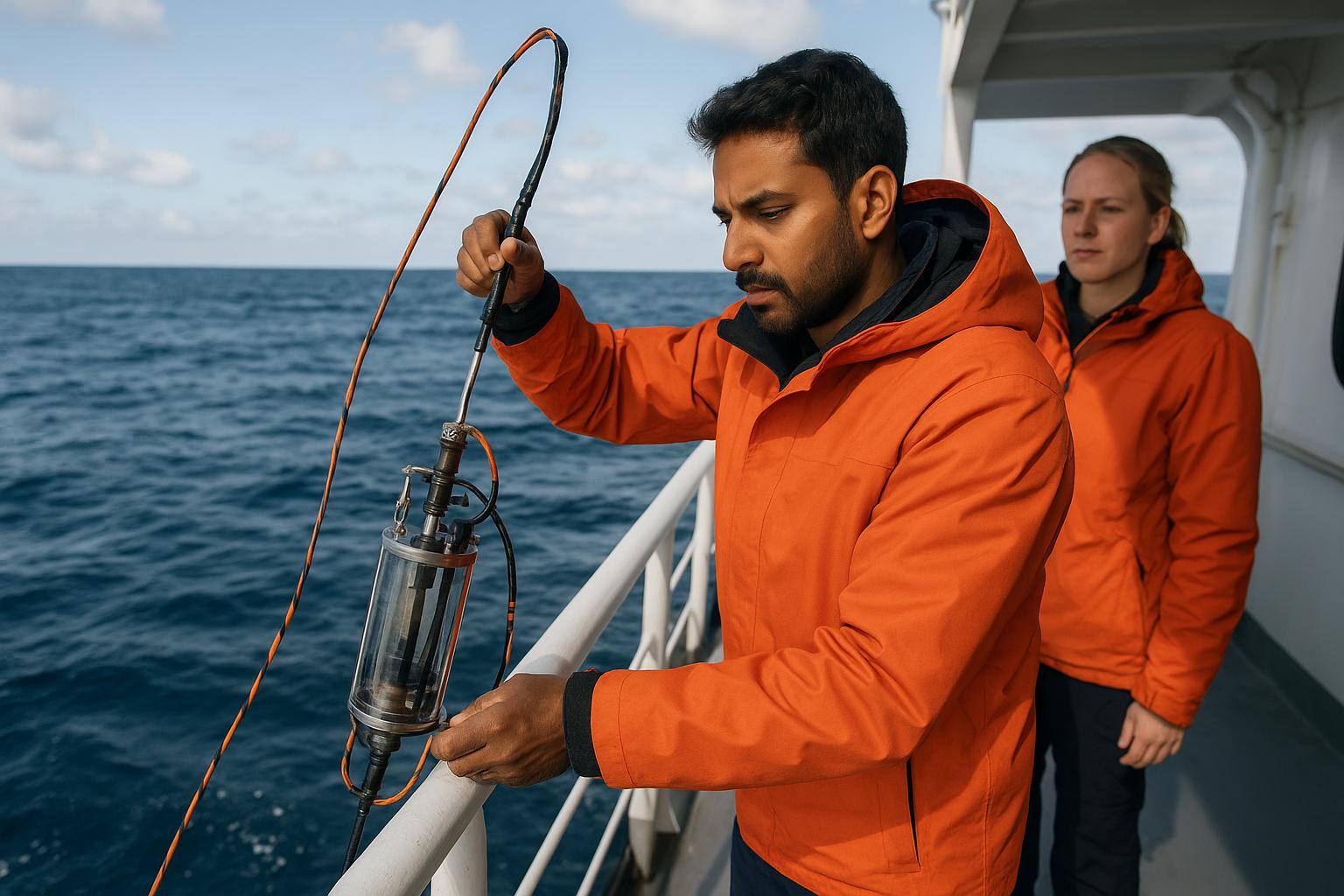
Anyone who has spent time underwater knows the sea is rarely crystal clear. Even in bright daylight, tiny flecks often float past like slow motion snowfall. Scientists call this steady drift “ocean snow,” and it is becoming a key focus for climate research.
Ocean snow is made up of small particles that move through the water column, creating a cloudy look that can limit visibility for divers. While it may seem like background debris, researchers treat it as an important signal of how the ocean works as a living, moving system.
Scientists investigating ocean snow are looking at what these particles contain and how they travel. This matters because the ocean plays a major role in Earth’s climate, including the movement and storage of carbon and the cycling of nutrients that support marine life.
The particles can include a mix of organic material and other fine matter that drifts downward and across different layers of the ocean. Understanding when and where ocean snow forms, and how quickly it sinks or spreads, helps researchers build a clearer picture of what is happening beneath the surface on a day to day basis.
Studying ocean snow also helps scientists interpret why the ocean can look cloudy even in calm conditions. The water column is not a static space. It is filled with material constantly moving, breaking down, and being reused by marine organisms.
By probing ocean snow, scientists aim to connect these drifting particles to larger climate patterns. The ocean is a major regulator of Earth’s system, and small scale processes can influence how heat and carbon are distributed over time.
Research into ocean snow adds another tool for understanding climate processes that are difficult to observe directly. What looks like underwater snowfall may hold measurable clues about how the planet’s biggest ecosystem responds to change.