




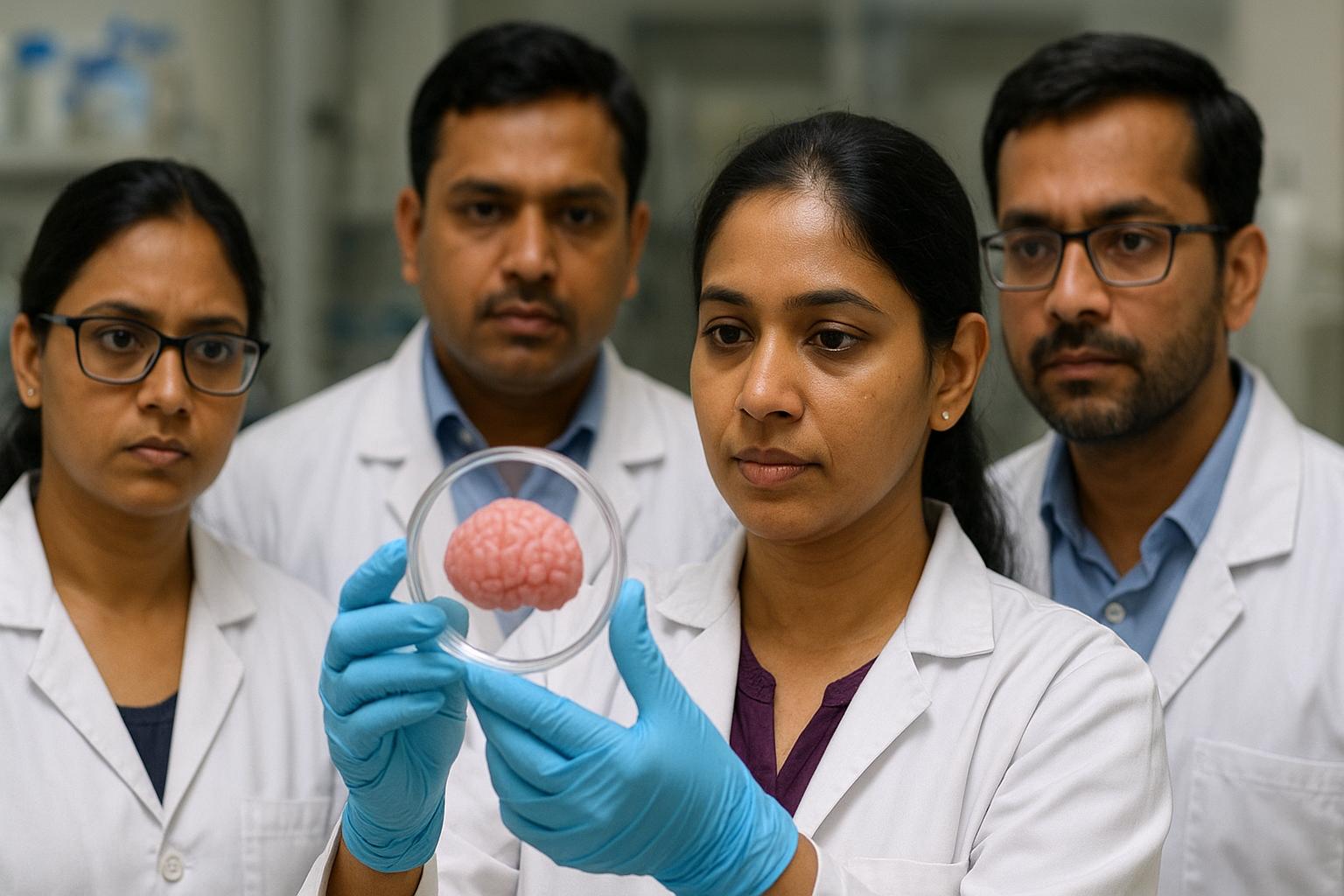
Kolkata has reported a significant laboratory milestone in neurological research. A team of neurologists and researchers in the city has created “mini brains” using real human tissues along with blood vessels, in what has been described as the first such effort in India.
The lab-grown models are designed to help scientists study a neurological ailment more closely. By developing brain-like tissue structures that include blood vessels, the researchers aim to observe disease-related changes in a controlled setting, using material that reflects human biology more directly than many conventional lab systems.
Unlike simplified cell cultures, these mini brains are built from actual human tissue, with vascular components incorporated into the model. This approach is intended to support deeper investigation into how neurological disorders affect brain tissue and how blood supply and vessel networks may be involved in disease processes.
The work has been carried out by a city-based group comprising neurologists and research specialists. The development has drawn attention because it represents an Indian first in creating mini brain models using human tissues and blood vessels specifically for studying neurological disease.
Research teams globally have been exploring organ-like lab models for years, but the Kolkata project adds a new domestic capability for studying complex brain conditions with human-derived materials. Such models can be used to observe tissue behavior and biological responses under laboratory conditions, enabling structured research around neuro ailments.
The team’s focus, as stated in the report, is to use these mini brains as a study platform for a neurological illness. Details on the specific disorder and the next steps in experimentation were not provided in the source information.