





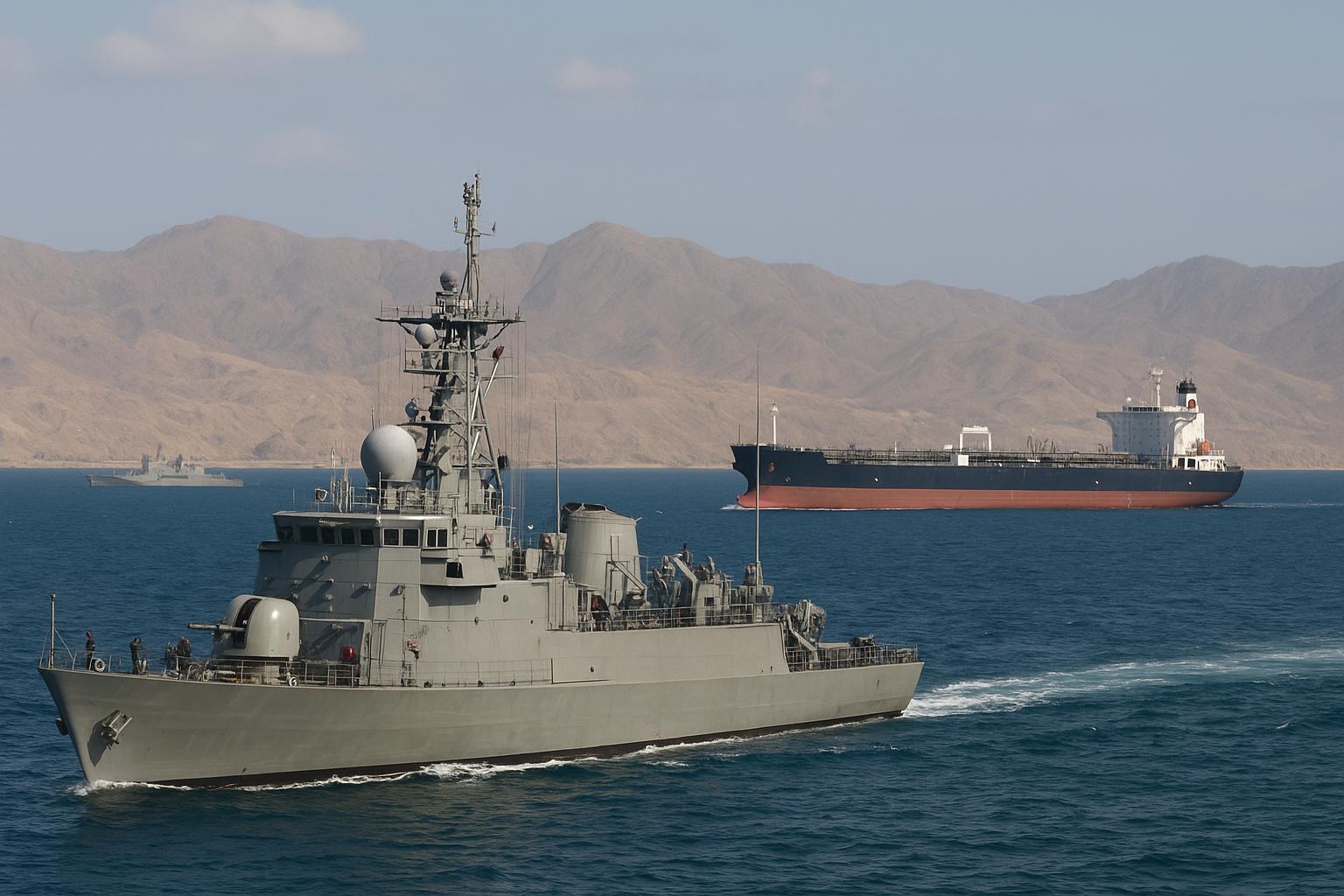
New guidance emerges for traffic through a key oil route
Iran has issued fresh conditions for ships moving through the Strait of Hormuz, one of the world’s most critical maritime corridors. An Iranian representative said vessels that are not linked to what Tehran describes as “Iran’s enemies” can pass through the strait, provided they coordinate security and safety arrangements with Iranian authorities.
The statement underscores Iran’s intent to manage passage through the narrow waterway using a screening approach based on a ship’s perceived links, along with a requirement for prior coordination.
What Iran is asking ships to do
According to the Iranian representative, the key requirement is coordination with Tehran on security and safety measures. The guidance suggests that passage is not being described as automatically open to all shipping, but instead tied to compliance with procedures and the ship’s affiliations.
The communication has drawn attention because of the strategic importance of the Strait of Hormuz for global energy shipments and commercial maritime traffic.
Japan’s minesweepers mentioned amid the new rule
The development also references Japan’s minesweepers, placing them among the vessels impacted by the evolving passage conditions. Minesweepers are naval ships designed to detect and clear mines, and their movement through sensitive waterways can attract scrutiny due to their military role.
The mention signals that the guidance is not limited to commercial vessels alone, and may also affect naval or security related movements in the region.
Why the Strait of Hormuz matters
The Strait of Hormuz connects the Persian Gulf with the Gulf of Oman and onward to the Arabian Sea. It is routinely used by oil tankers, cargo ships, and other vessels transiting to and from Gulf ports.
Any changes in rules or operating expectations in the strait can have immediate implications for shipping planning, including routing decisions, security protocols, and coordination between ship operators and regional authorities.
What is confirmed so far
Based on the statement cited, Iran’s position is that passage is available to ships not linked to “Iran’s enemies” as long as they coordinate safety and security arrangements with Tehran.
No additional operational details were provided in the statement, including how affiliations would be assessed or what specific coordination steps would be required. The guidance, however, clearly sets out the principle that transit is conditional on both identity and prior arrangements.