




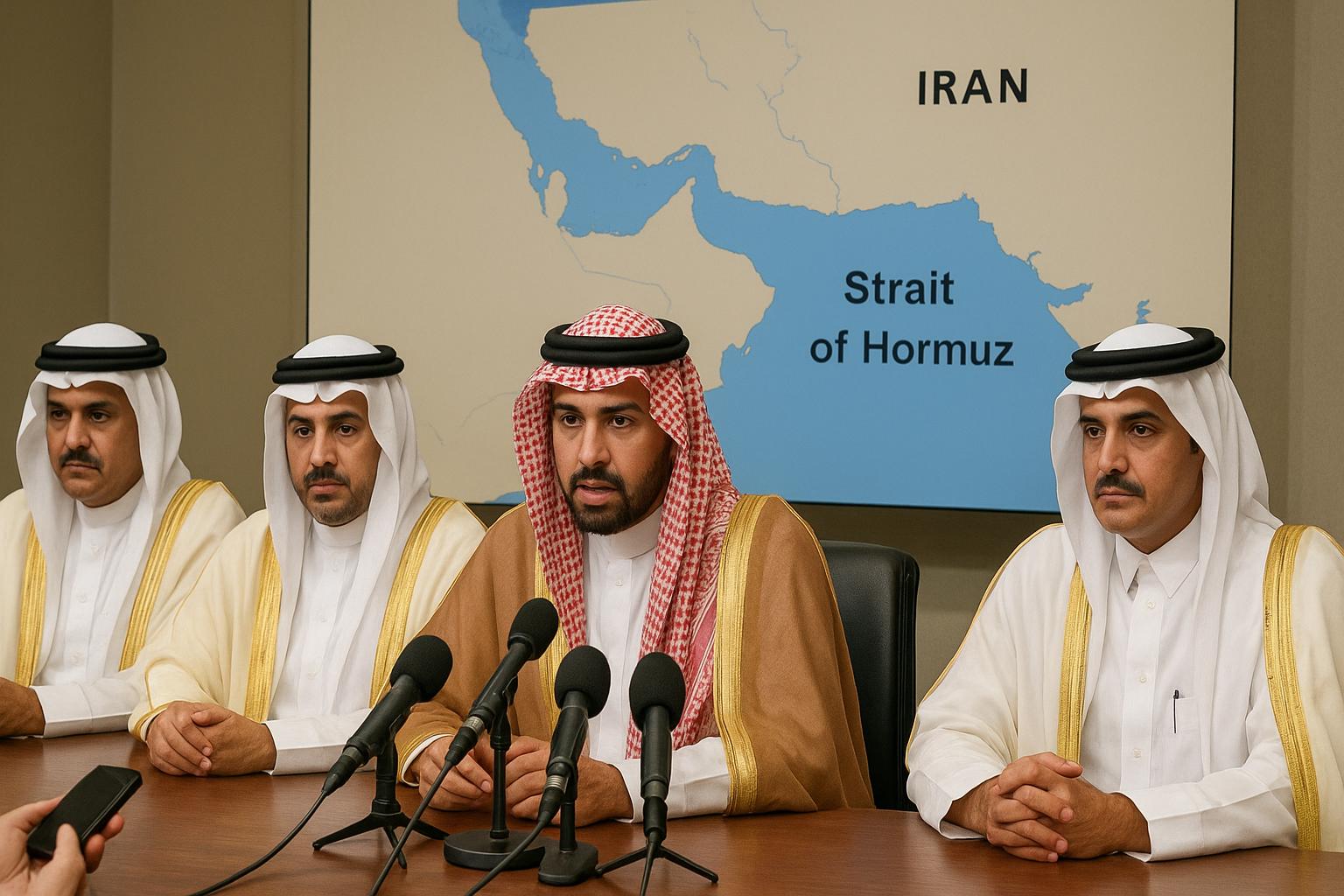
The six member states of the Gulf Cooperation Council (GCC) are pushing for the United States to significantly reduce Iran’s military capabilities following a period of relentless strikes and renewed fears of disruption in the Strait of Hormuz, according to a News18 report.
The GCC includes Saudi Arabia, the United Arab Emirates, Qatar, Kuwait, Bahrain and Oman. Despite the growing pressure on regional security, the group has so far avoided openly striking back, choosing instead to keep their response limited to measures framed as self defense.
Why Hormuz matters to Gulf states
The Strait of Hormuz is a critical sea route for energy exports from the Gulf. Any threat of a blockade or interference has immediate implications for shipping, insurance costs and the wider movement of oil and gas.
For GCC economies, stability in the waterway is closely tied to national revenue, supply commitments and broader economic planning. A prolonged security scare can also affect investor confidence and regional trade flows.
Call for US action, not direct retaliation
In this context, the report says GCC states want Iran to be “defanged” by the US, signalling a preference for Washington to take the lead in constraining Tehran’s capacity to project power.
The approach also reflects the GCC’s current posture of restraint. While the states have not remained passive, they have not publicly embraced a strategy of direct and open retaliation. Instead, their actions have stayed within the boundaries of defending their territory and assets.
Balancing security and escalation risks
The GCC’s limited public response indicates a focus on containing risk while protecting key infrastructure and sea lanes. With the Hormuz route at the centre of global energy logistics, any escalation can have rapid regional and international consequences.
The report highlights that the bloc’s stance has been consistent so far: no open strike back, and a reliance on defensive steps, alongside calls for stronger US measures to address the threat.