





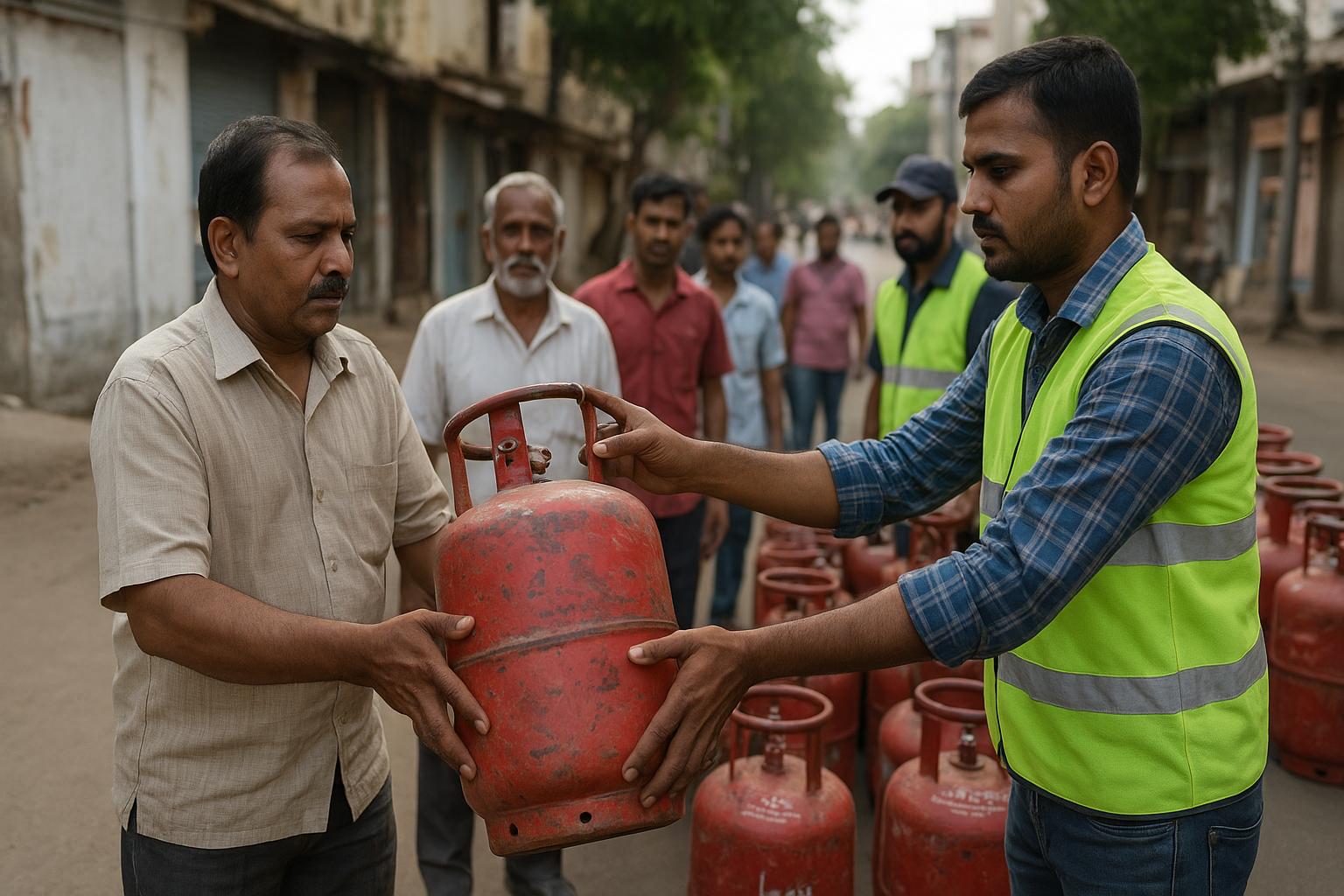
The Indian government has stepped up measures to manage an ongoing LPG supply crunch, asking households that already have piped natural gas (PNG) to give up their LPG cylinders. The appeal comes as panic buying by households has continued in many places, adding pressure on supplies.
According to updates reported by Mint, supply issues have been linked to a halt in maritime traffic through the Strait of Hormuz, a key global shipping route. The disruption has affected the movement of fuel shipments, contributing to the current tightness in availability.
Commercial LPG cylinders distribution begins
On Saturday, the government began distribution of commercial LPG cylinders across states and Union Territories. The move is aimed at ensuring availability for businesses that depend on commercial cylinders, while stabilising overall supply lines during the period of disruption.
Commercial cylinders are commonly used by hotels, restaurants and small enterprises. By starting distribution across multiple regions, the government is attempting to maintain continuity for commercial users while addressing broader supply constraints.
Government appeal to PNG households
Authorities have urged homes that have PNG connections to voluntarily give up LPG cylinders. The request is intended to prioritise cylinder availability for households that do not have access to piped gas and rely entirely on LPG for cooking.
Officials have also highlighted that panic buying can worsen shortages by creating sudden spikes in demand. The government’s message is focused on reducing unnecessary stocking and keeping supply accessible for those with immediate needs.
Why the situation tightened
The reported trigger for the present supply stress is the halt in maritime traffic through the Strait of Hormuz. With shipping interruptions affecting the movement of energy cargo, supply planning and replenishment cycles can face delays, which in turn influences domestic distribution.
While the government has initiated commercial cylinder distribution as an immediate step, the situation continues to be monitored as demand patterns shift and supply routes remain affected.
Consumers are being advised through official appeals to avoid panic purchases and to follow local availability updates shared by distributors and authorities.