





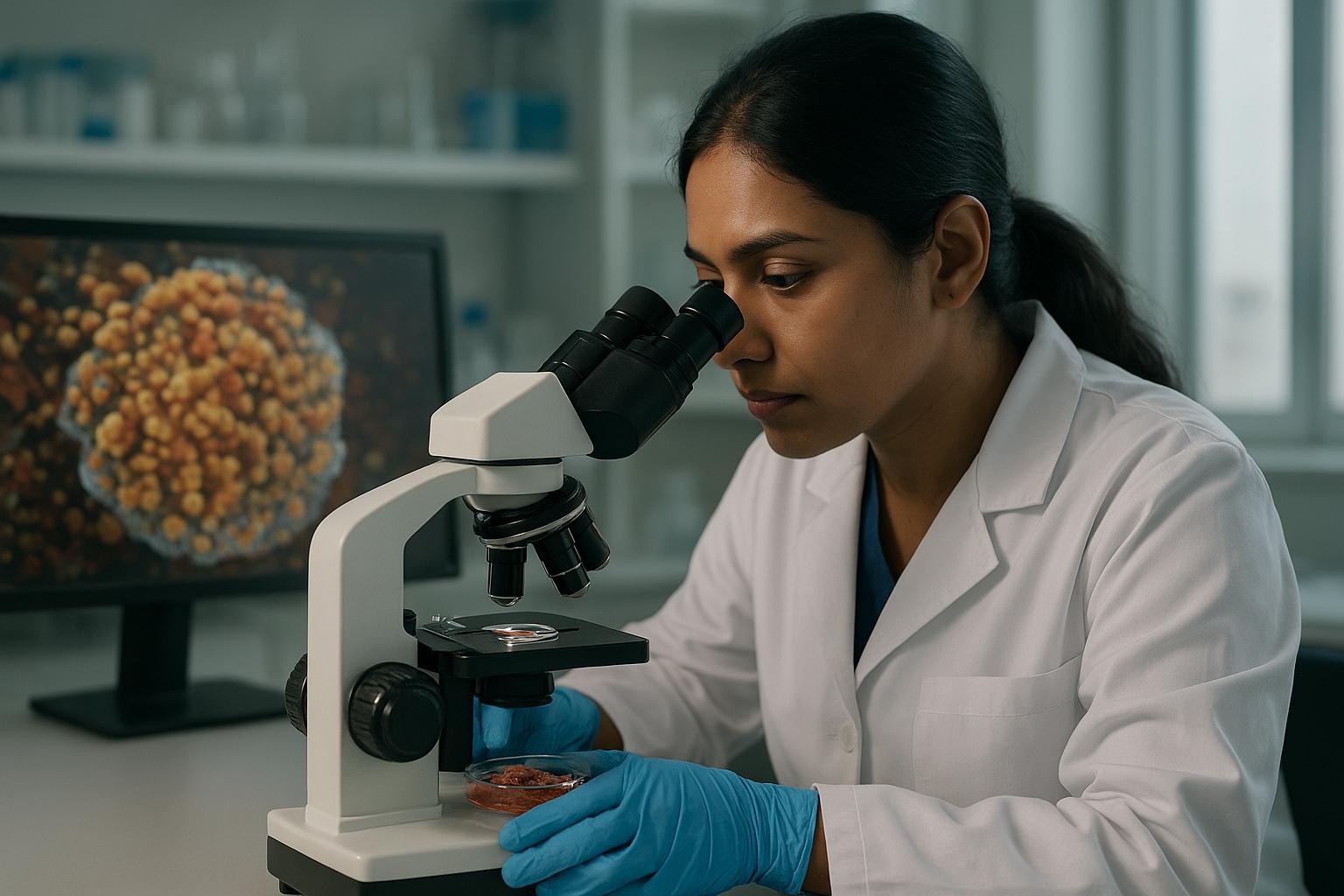
Researchers have uncovered a detailed look at how some of the most feared hospital bacteria construct biofilms, the protective layers that help them survive on surfaces and medical equipment.
The work focuses on a mechanism that allows dangerous pathogens to assemble strong, structured biofilms. Biofilms are often described as microbial fortresses because they can make bacteria harder to remove and more difficult to treat when infections take hold.
According to the report, the findings were made at near atomic resolution, allowing scientists to see a crucial process involved in biofilm formation with exceptional clarity. This level of detail is important because it can reveal how bacteria organise their protective material and stabilise it over time.
Why biofilms matter in hospitals
Biofilms are a major concern in healthcare settings because they can form on a variety of surfaces, including those that come into close contact with patients. Once established, these bacterial communities can persist and act as a continuing source of infection risk.
Infections linked to biofilm forming pathogens can be challenging for hospitals to manage, partly because the biofilm structure can act as a barrier. This can reduce the effectiveness of standard disinfection approaches and complicate treatment.
Key bacteria in focus
The study highlights two well known hospital associated pathogens: Acinetobacter baumannii and Pseudomonas aeruginosa. Both are commonly cited in discussions about healthcare associated infections and are known for their ability to survive in clinical environments.
These bacteria are also associated with difficult to treat infections, particularly when they gain a foothold in vulnerable patients. Their capacity to build robust biofilms is one reason they can spread in settings where sterility and cleaning are constant priorities.
What the new mechanism explains
The researchers identified a crucial mechanism that enables these pathogens to assemble sturdy biofilms. By observing the process at near atomic resolution, the study provides a clearer picture of how biofilm components come together to form a durable protective structure.
Such insights can help scientists better understand the step by step biology behind biofilm assembly. In practical terms, this knowledge can guide further research aimed at disrupting biofilm formation, a strategy that could complement existing infection control measures.
The report was published by The Indian Practitioner on February 26, 2026.