





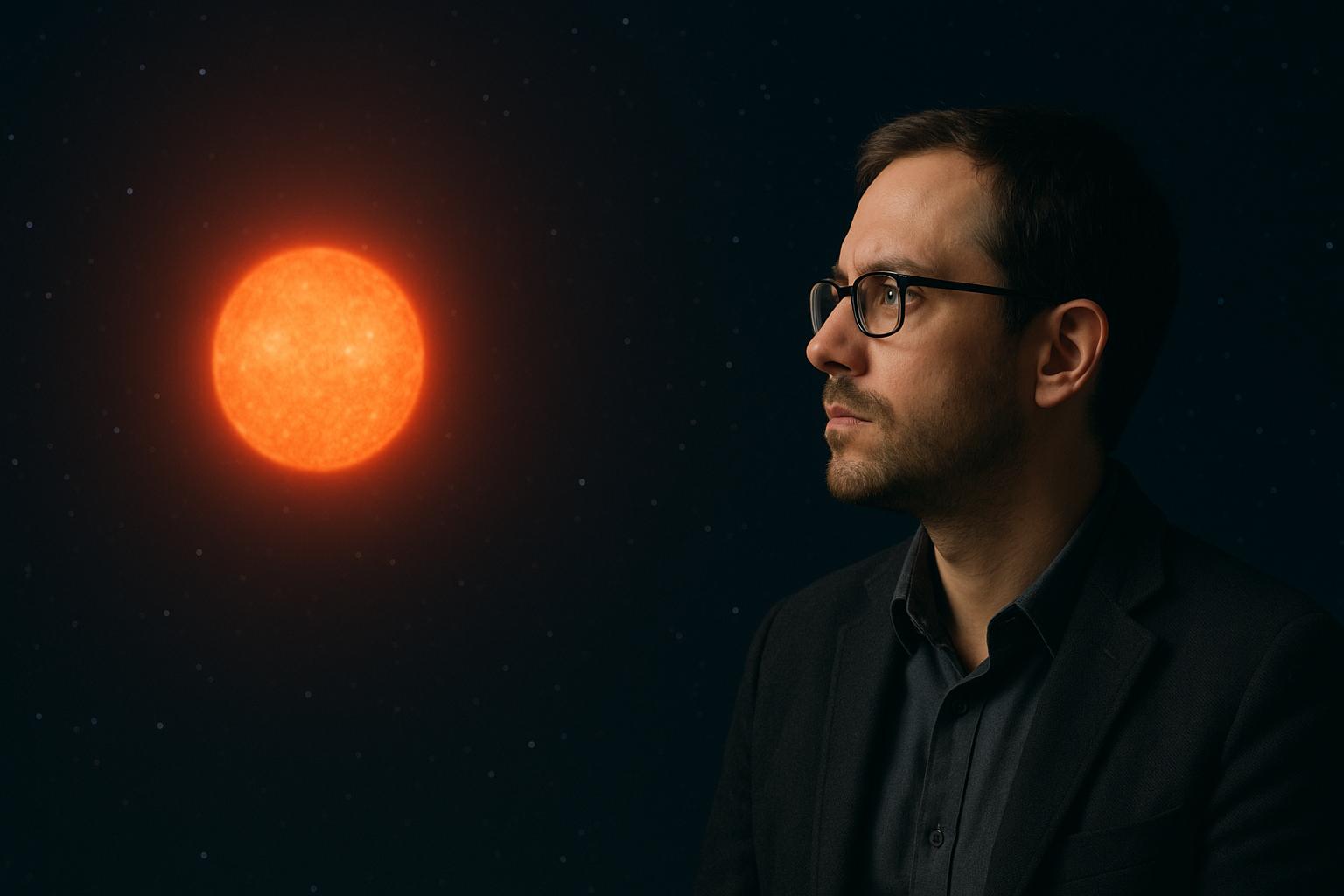
Why Betelgeuse keeps returning to the news
Betelgeuse, a bright red giant star known to skywatchers around the world, continues to grab attention every few months as fresh claims surface that it is on the verge of a dramatic explosion.
According to the latest report, this cycle of headlines is not new. Betelgeuse has been repeatedly described as being close to blowing up for decades, with scientists and observers pointing to its late stage of stellar evolution as a reason it remains under constant watch.
“About to explode” does not mean “imminent”
The key point highlighted in the update is the difference between a star being in its final phase and an explosion happening soon in human terms.
Betelgeuse is widely discussed as a candidate for a future supernova because it is a massive red giant nearing the end of its life cycle. However, the report underlines that even if a star is considered close to its end on an astronomical scale, the actual event can still be far away when measured in years and centuries.
In this case, the report states that the likely timeline extends to millennia. That means the star could remain in a late evolutionary stage for a very long time before any final collapse or explosion occurs.
Why repeated predictions keep happening
The report notes that Betelgeuse has made it into Google News multiple times a year because new statements by different scientists or research groups often revive the same central idea that the star is nearing an explosive finale.
Such renewed attention can create the impression that something has changed dramatically overnight. But the update emphasises that Betelgeuse has been discussed in this way for decades, indicating a long running scientific interest rather than a sudden new warning.
What readers should take away
The report’s message is straightforward. Betelgeuse is indeed a star approaching the end of its life in cosmic terms, which is why it remains a frequent subject of scientific discussion and popular interest.
At the same time, the expected timescale for any supernova event is far beyond a typical human lifespan. The star may continue to generate periodic excitement online, but the current understanding presented in the report points to a wait measured in millennia, not days or years.