





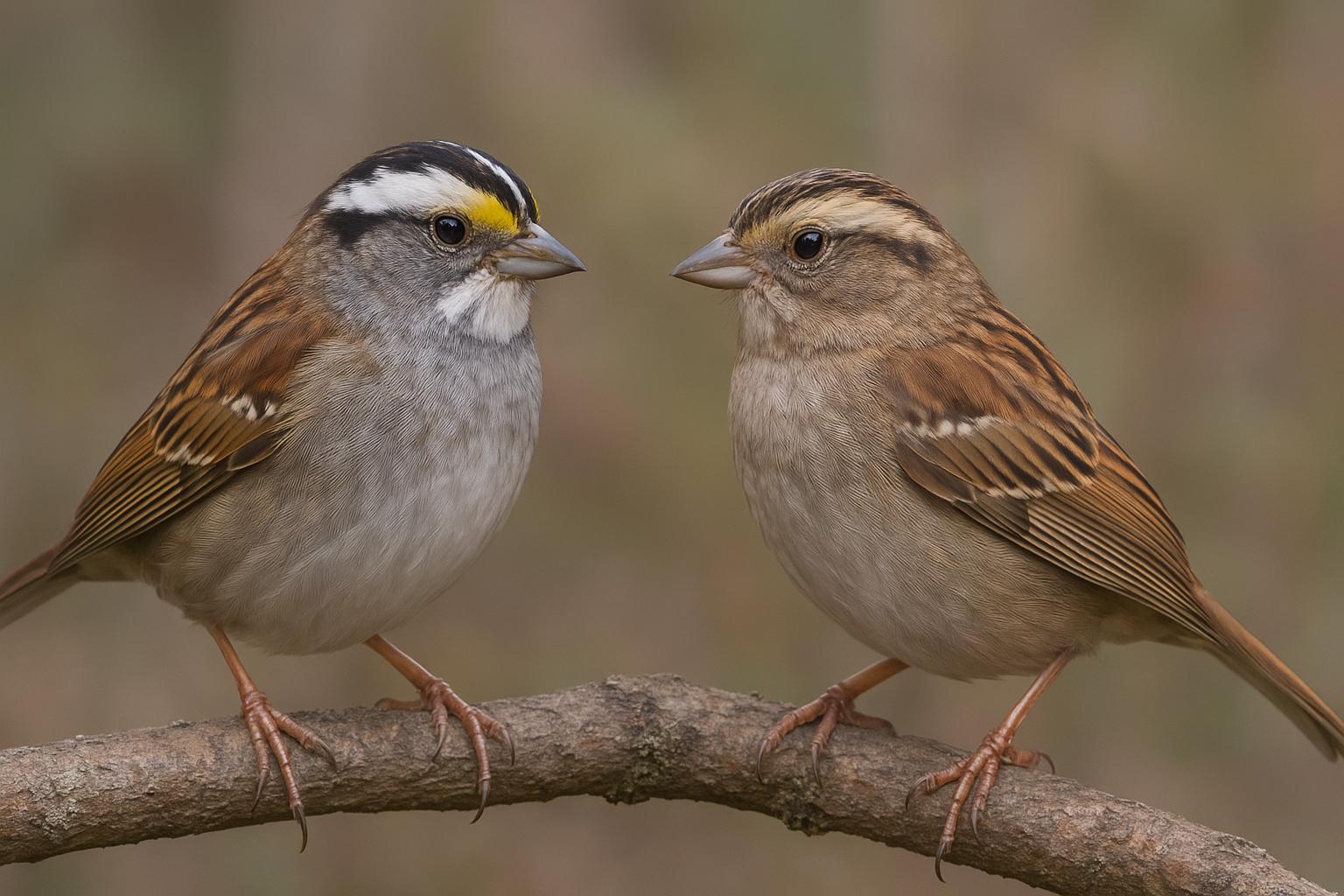
A sparrow that challenges easy labels
White-throated sparrows, a well studied songbird, are drawing attention for what they reveal about sex in nature. Observations and research on this species show that biological sex and related traits can appear in combinations that do not fit cleanly into a simple male or female classification.
The findings underline a broader message from biology. In many animals, sex linked characteristics are shaped by genetics, hormones, development and behaviour, and these factors do not always line up in a single, uniform way across individuals.
More than one way to be male or female
The white-throated sparrow is known for having distinct forms within the same species. These forms are connected to differences in appearance and behaviour, and they influence how individuals pair up and reproduce.
Instead of presenting only two clear categories, the species demonstrates a spectrum of sexual identities and roles. Some birds show mixes of traits that challenge the expectation that physical features, reproductive biology and behaviour will always match a strict male-female template.
What scientists learn from this species
Because the white-throated sparrow has been closely examined over time, it provides a useful window into how variation can persist within a population. It also helps researchers understand how different combinations of traits can coexist and how they may affect mating patterns and survival.
The work reinforces a key point for biology education and scientific reporting. Sex is often taught as a binary concept for simplicity, but living systems frequently show complexity, including overlapping characteristics and intermediate patterns.
Why it matters beyond one bird
The implications go beyond ornithology. Recognising natural diversity in sex related traits helps scientists describe animal populations more accurately and ask better questions about evolution, genetics and behaviour.
In the case of the white-throated sparrow, its range of traits offers a clear example that nature does not always follow human categories. Researchers see it as evidence that biological sex can be more nuanced than a strict two box model suggests.