





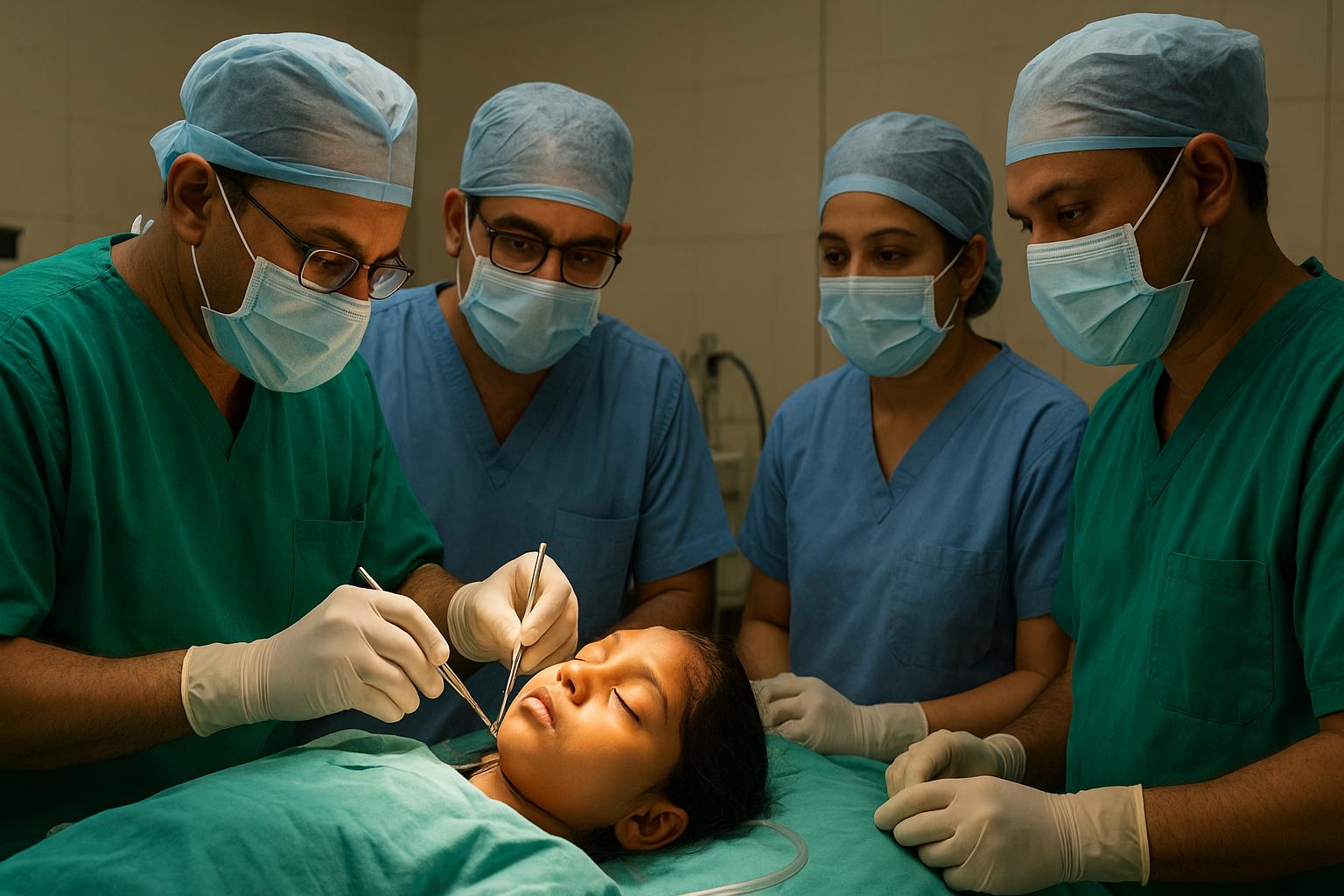
Rare case treated at Sola Civil Hospital
Doctors at Sola Civil Hospital in Ahmedabad have successfully treated a 12 year old girl suffering from a rare and dangerous fungal infection that spread to her eyes and part of her brain. The case was described as critical, requiring urgent medical intervention and a highly coordinated surgical response.
According to the hospital’s medical team, the infection was severe and had progressed beyond its initial area, affecting the eye region and extending into the brain. Such spread increases risk and complexity, as doctors must manage both the infection and the sensitive structures involved.
Complex surgery to remove infected tissue
The treatment involved a complex procedure aimed at removing the fungal infection and the affected tissue. Doctors performed surgery to clear the infection from the areas involved, including the eye region and the portion of the brain affected by the spread.
Because the infection had reached multiple critical sites, the operation required careful planning and precision. The medical team worked to ensure the infection was removed while safeguarding surrounding areas as much as possible.
Outcome and hospital response
The hospital confirmed that the surgery was successful and that the child was saved following the procedure. The case was highlighted as rare, underlining the seriousness of fungal infections when they become invasive and spread beyond their usual limits.
Sola Civil Hospital, one of the major public healthcare facilities in Ahmedabad, handled the situation as an emergency medical case due to the rapid progression and high risk associated with infection reaching the brain.
Why the case stands out
Doctors involved described the situation as unusual because the infection spread to the eyes and part of the brain, turning it into a critical condition that demanded immediate specialised care. The successful surgical removal in such a scenario was presented as a significant medical effort by the treating team.
The hospital’s report focused on the complexity of the surgery and the rarity of the infection’s spread, marking the case as an important example of advanced care delivered in a government hospital setting.